
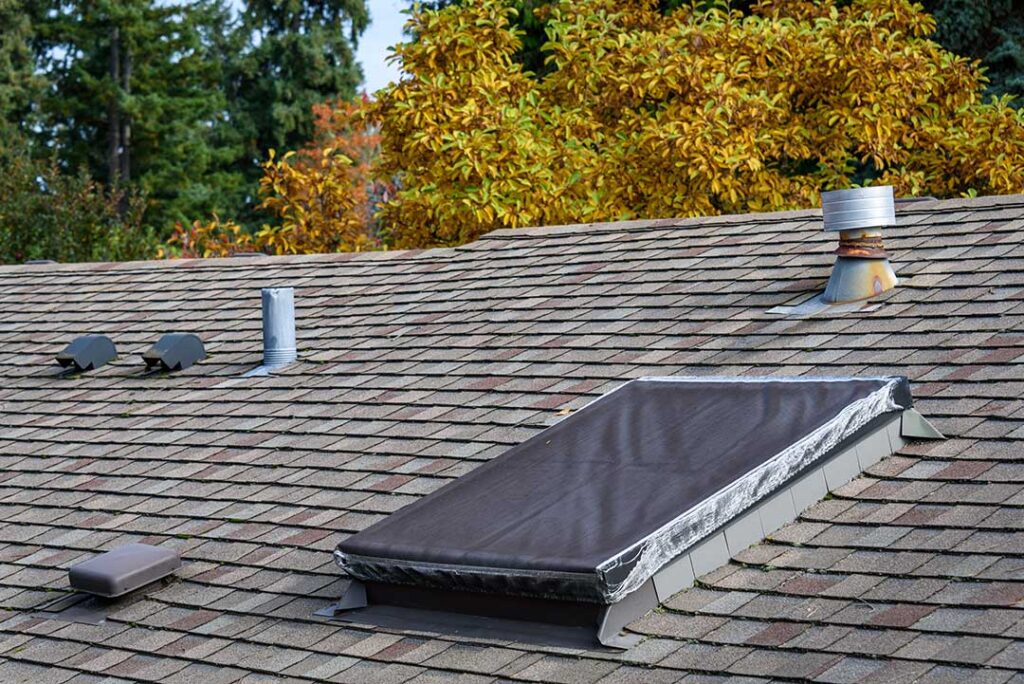
Roof penetrations are any points where something passes through the roofing system, such as plumbing vents, chimneys, skylights, exhaust fans, satellite mounts, or electrical conduits. These openings are necessary, but they can become leak points if flashing, seals, or surrounding shingles are damaged.
Proper sealing is not simply a matter of spreading caulk around an opening. A durable repair depends on directing water away from the penetration, allowing materials to move with seasonal temperature changes, and using compatible roofing components.
What makes a roof penetration vulnerable to leaks?
A roof penetration interrupts the continuous surface that normally sheds rain and melting snow. Water can collect around the opening, move sideways beneath shingles, or enter through a failed joint.
Common causes of leakage include:
- Cracked or dried-out sealant
- Rusted, bent, or poorly installed flashing
- Loose plumbing vent collars
- Missing roofing cement beneath flashing edges
- Shingles cut too closely or too far from the penetration
- Fasteners placed where water can reach them
- Ice movement and repeated freeze-thaw cycles
- Improper repairs layered over older damage
In Camillus, NY, roofs must handle snow, freezing temperatures, spring thaw, heavy rain, and summer heat. Those changes cause roofing materials to expand and contract. A seal that appears sound in warm weather may split or pull away after repeated seasonal movement.
Which roof penetrations need special attention?
Different penetrations require different sealing methods. The correct approach depends on the material, location, slope, and type of flashing already present.
Plumbing vent pipes
Plumbing vents usually pass through the roof with a metal or rubber-collared flashing assembly. The upper part of the flashing should sit beneath the shingles above the pipe, while the lower part remains over the shingles below it. This arrangement allows water to flow around the pipe and continue downhill.
A failed rubber gasket often causes leaks around vent pipes. Sealant applied over the old gasket may slow water entry temporarily, but it does not replace a deteriorated flashing assembly.
Chimneys
Chimneys require more than surface caulk. Their main defenses include base flashing, step flashing along the sides, and counterflashing built into or secured against the masonry.
The joint where the chimney meets the roof is especially vulnerable. Mortar joints can crack, metal can corrode, and older flashing may separate as the chimney and roof move at different rates. Chimney flashing should not be covered with a thick layer of roofing cement as a substitute for properly fitted metalwork.
Skylights
Skylights depend on an integrated flashing system. Water may enter through damaged flashing, blocked drainage channels, failed seals around the frame, or deteriorated roofing nearby.
Applying caulk around the outer frame is rarely a complete solution. Some skylights have replaceable gaskets or manufacturer-specific flashing components, while others may require more extensive repair.
Exhaust fans and roof vents
Bathroom and kitchen exhaust ducts need weatherproof roof caps with properly installed flashing. The duct should also be insulated where required to reduce condensation inside the pipe.
A vent that is sealed from the outside but improperly connected inside the attic can still create moisture problems. Warm, damp air may condense on cold surfaces, leading to wet insulation, staining, or mold-like growth.
Antennas, mounts, and other attachments
Fastened roof accessories create holes that must be sealed at every exposed fastener and base. A mounting system should shed water rather than rely entirely on sealant.
If an attachment is no longer needed, removing it leaves holes that must be repaired with compatible roofing materials. Simply covering the holes with a blob of caulk is not a durable method.
How should a roof penetration be sealed?
A proper repair usually follows a sequence rather than relying on one product.
1. Inspect the surrounding roofing
Look for damaged shingles, lifted edges, exposed fasteners, rust, cracked flashing, and darkened decking or insulation below. The visible leak may be several feet away from the actual entry point because water can travel along rafters or roof sheathing.
Interior inspection is useful, but a dry ceiling does not prove that the roof is watertight. Small leaks may only appear during wind-driven rain or snowmelt.
2. Remove failed materials carefully
Loose sealant, deteriorated roofing cement, and damaged shingles should be removed without tearing the underlayment or bending sound flashing. Adding new sealant over loose or contaminated material usually creates a weak bond.
The area should be clean and reasonably dry before applying a compatible sealant. Wet or dusty surfaces can prevent adhesion.
3. Restore the flashing system
Flashing should overlap in the direction water travels. Upper components generally go beneath the roofing above, while lower components overlap the roofing below. Side flashing must be arranged so water cannot enter through exposed seams.
The exact layout varies by penetration. The goal is to use metal or manufactured flashing to carry water away, with sealant serving as a secondary defense rather than the primary drainage system.
4. Use the right sealant sparingly
Roofing sealants are not interchangeable. A product must be suitable for the roofing material, flashing metal, temperature range, and amount of movement expected.
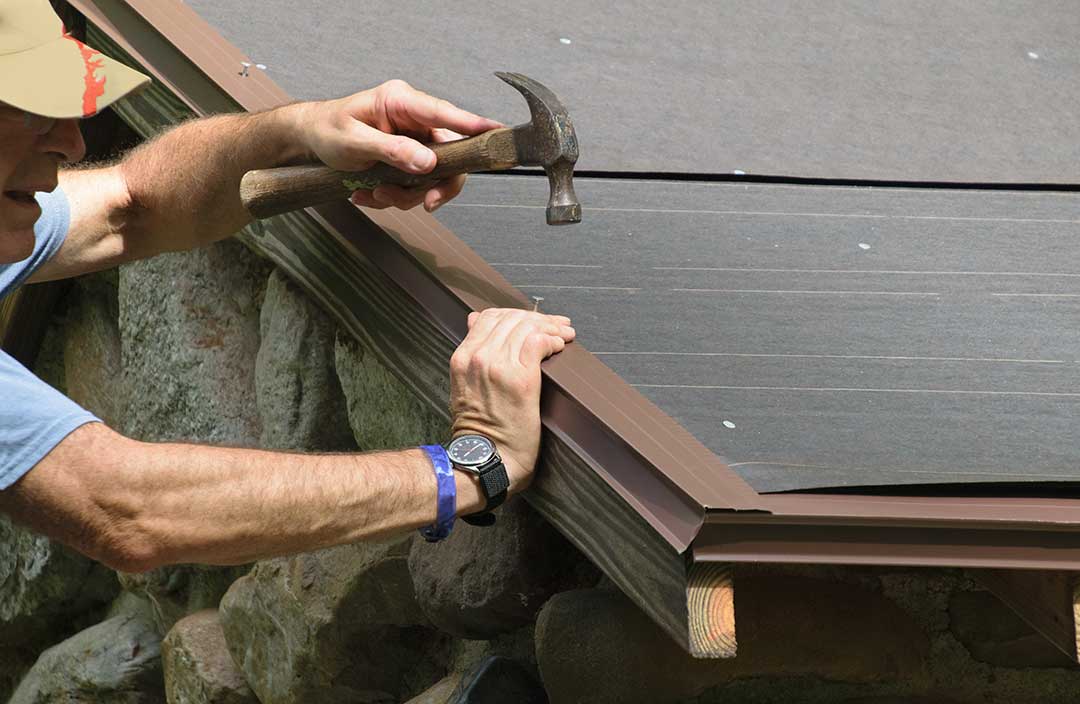
A good sealant should:
- Adhere to the surfaces being joined
- Remain flexible after curing
- Resist ultraviolet exposure and moisture
- Be compatible with asphalt roofing and metal
- Not damage rubber, plastic, or painted surfaces
Excessive sealant can hide defects, trap moisture, and make future repairs more difficult. A neat, continuous bead at the correct joint is generally more useful than a thick coating spread over the entire area.
Can a homeowner seal a roof penetration safely?
Minor maintenance at ground level may be reasonable, but roof access presents fall risks even on relatively low-slope roofs. Wet shingles, frost, moss, steep pitches, and snow make conditions more hazardous.
Avoid walking on a roof during icy weather, after rain, or when shingles are brittle. Ladders should be placed on stable ground and secured according to safety guidance. Electrical penetrations and damaged wiring require additional caution.
A repair may need experienced assessment when:
- Water is entering near electrical components
- The roof decking feels soft
- The penetration is near a chimney or skylight
- Flashing is rusted, missing, or extensively bent
- The leak continues after a repair
- Snow or ice is present on the roof
- The roof is steep, high, or difficult to access
Safety and accurate diagnosis matter more than applying a quick patch.
What common sealing mistakes should be avoided?
Several shortcuts create the appearance of repair without correcting the drainage problem.
Do not seal only the downhill side of a penetration while leaving upper flashing gaps exposed. Do not drive new fasteners through flashing without sealing or protecting the penetration point. Do not cover a leaking pipe collar with layers of roofing cement while ignoring a cracked gasket.
It is also a mistake to assume that every roof leak directly beneath a pipe or vent originates at that pipe. Water may enter higher on the roof and travel along the underside of the shingles or roof deck.
How often should roof penetrations be checked?
Roof penetrations should be reviewed at least once each year and after major wind, hail, or heavy snow events. Interior attic spaces can be checked for damp insulation, water marks, rusted nails, or daylight around penetrations.
The most useful inspection times are often spring, after snow and ice have cleared, and late fall, before winter weather makes roof access more difficult. Early attention to cracked flashing or separated sealant can prevent moisture from reaching insulation, framing, and interior finishes.
A properly sealed penetration is a complete water-management detail: sound flashing, correct overlap, intact roofing, suitable sealant, and safe installation. Caulk has a role, but it should support the flashing system rather than replace it.
