
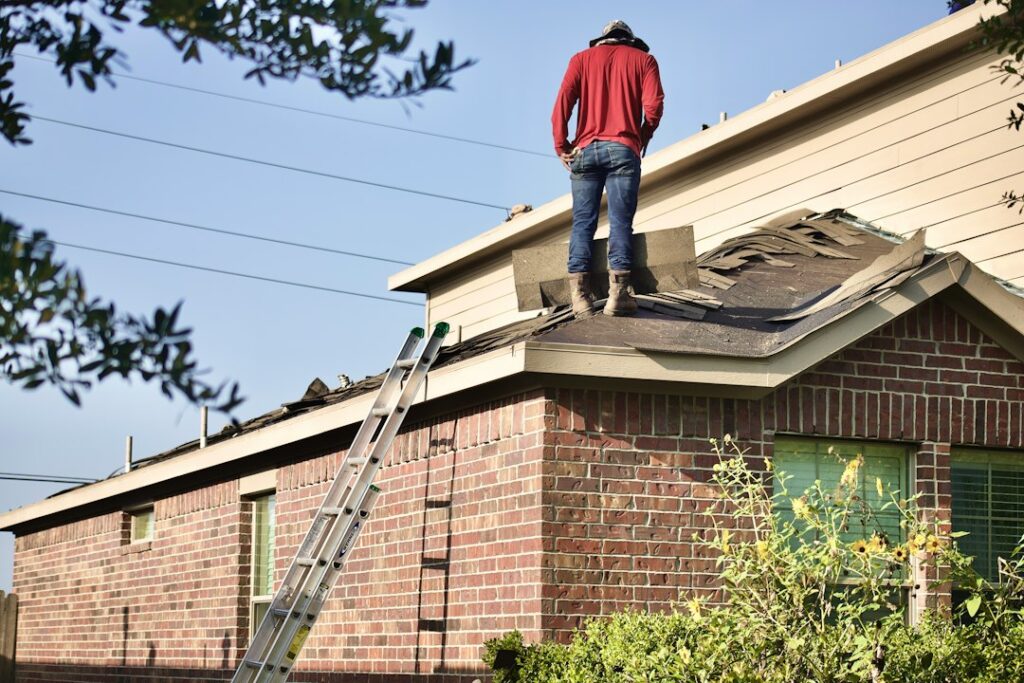
Roof work is one of the most hazardous home-maintenance tasks. A roof can look dry and stable while hiding loose shingles, weak decking, slippery algae, or dangerous ice. For homeowners in Camillus, seasonal snow, freeze-thaw cycles, wind, and wet leaves can make roof access especially unpredictable.
The safest approach is to inspect from the ground whenever possible and avoid climbing onto the roof unless the conditions, equipment, and task are clearly within your ability.
Is it safe for a homeowner to walk on the roof?
Not always. A roof should be treated as a potentially hazardous surface, even when it appears to be in good condition.
Roof coverings become slippery from dew, frost, rain, moss, algae, pine needles, and loose granules. A slight slope can make it difficult to regain balance after one misstep. Shingles may also crack under pressure, particularly in cold weather when asphalt-based materials become less flexible.
Before considering roof access, ask:
- Is the roof dry, clean, and free of ice?
- Is the weather calm, with no recent rain or strong wind?
- Can the task be completed from a ladder, attic, or ground-level location?
- Is the roof steep, unusually high, or surrounded by overhead utility lines?
- Is there a safe way to get on and off without stepping on fragile edges?
If the answer to any of these questions is uncertain, staying off the roof is the safer decision.
What should homeowners check before using a ladder?
A ladder must be placed on firm, level ground and positioned away from hazards. Soft soil, icy pavement, wet grass, and uneven landscaping can allow the feet to shift.
Before climbing:
- Inspect the ladder for bent rails, loose steps, cracked feet, or damaged locks.
- Set it on a stable surface, never on snow, ice, boxes, buckets, or stacked materials.
- Keep the ladder away from overhead electrical wires.
- Face the ladder while climbing and maintain three points of contact.
- Keep both hands free by using a tool belt or hoisting small items after reaching a safe position.
- Do not climb while carrying bulky materials that can affect balance.
- Keep children and pets away from the work area.
A ladder should extend above the roof edge far enough to provide a secure handhold when stepping onto or off the roof. Climbing onto a roof from an unsecured ladder is one of the most common ways a minor repair becomes a serious fall.
How can a roof be inspected without climbing?
Many routine observations can be made safely from the ground. Binoculars can help identify missing shingles, exposed underlayment, sagging roof lines, damaged flashing, or debris collecting in valleys.
Look for:
- Shingles that are missing, curled, cracked, or visibly displaced
- Dark streaks, moss, or heavy algae growth
- Rusted or separated metal flashing around chimneys, vents, and roof edges
- Gutters pulling away from the fascia
- Granules accumulating near downspouts
- Water stains or damp areas in the attic
- Daylight visible through the roof deck
- Snow or ice collecting unevenly in one area
After strong wind, inspect the yard for roofing pieces and check roof edges from the ground. Do not climb up immediately to investigate. Wind damage can leave weak shingles, exposed nails, and unstable sections that are not obvious from below.
What changes during winter in Camillus?
Winter conditions require extra caution. Snow can conceal roof edges, skylights, vents, and weak areas. Ice may form beneath a thin layer of snow or refreeze overnight after a warmer afternoon.
Homeowners should avoid walking on snow-covered roofs unless they have specialized fall-protection equipment and training. Snow can slide unexpectedly, and a person may lose footing even on a roof that normally feels manageable.

Snow removal also presents risks. Pulling snow from the roof can overload gutters, damage shingles, or create a heavy falling mass near doors, windows, vehicles, and people. Metal tools can gouge roofing materials, while aggressive scraping may remove protective granules.
Ice dams can contribute to water entering beneath shingles, but breaking them with a hammer or chopping tool can damage the roof. Interior stains, wet insulation, and repeated dripping are signs that the problem needs careful evaluation rather than forceful removal.
How do wet leaves and fall debris affect roof safety?
Leaves, twigs, and pine needles can hide surface damage and create slick walking conditions. They may also collect in valleys, around chimneys, and behind rooftop equipment, where trapped moisture can affect roofing materials.
Do not sweep debris from a roof while standing on the slope. A safer option is to inspect from the ground and clear accessible gutters from a properly positioned ladder only when the ladder and conditions are secure. Avoid reaching sideways, since overextending is a frequent cause of ladder falls.
Gutter cleaning should not be attempted during freezing weather, high winds, or heavy rain. Wet debris can make ladder work unstable, and icy gutters may be difficult to distinguish from solid footing.
What safety equipment is needed for roof work?
Footwear with clean, slip-resistant soles is essential, but good shoes do not eliminate fall risks. Gloves can improve grip, and eye protection is useful when clearing debris or driving fasteners.
For work on steeper or higher roofs, proper fall protection may include an approved harness, secure anchor, lifeline, and compatible equipment. These systems must be installed and used correctly. A harness attached to an unreliable anchor can create a false sense of security.
Ropes, garden hoses, extension cords, and improvised tie-off points are not substitutes for a properly designed fall-protection system. If a task requires specialized equipment or involves a steep roof, damaged decking, ice, or electrical hazards, the safest choice is to avoid the roof.
What should homeowners do after a storm?
After severe weather, begin with a ground-level inspection. Look for branches on the roof, loose siding, damaged vents, displaced shingles, and water entering the attic or upper floors.
Do not approach a roof if:
- Power lines are down or touching the house
- Large branches are resting on the structure
- The roof is visibly sagging
- The surface is covered with ice or unstable snow
- There is active electrical damage
- Wind remains strong
- Water is entering near electrical fixtures
If water is coming inside, place containers below drips when safe, move belongings away from the area, and avoid touching wet electrical components. A ceiling that is bulging from trapped water may need immediate attention; keep people away from the area until the risk is understood.
How can roof safety be improved year-round?
The safest roof maintenance plan is preventive. Keep gutters and downspouts clear, trim branches that could strike the roof, and check the attic for moisture or daylight twice a year. Inspect after major wind events and before the winter season.
Use ground-level photographs or binoculars to compare roof conditions over time. Marking the location of stains or debris can help determine whether a problem is changing.
Most importantly, do not rush a roof task because of a small leak, a few missing shingles, or a gutter blockage. Wet surfaces, cold temperatures, darkness, fatigue, and pressure to finish quickly all increase the chance of a fall. A repair that can wait until safe conditions is rarely worth risking a serious injury.
